Posts mit dem Label curso24 werden angezeigt. Alle Posts anzeigen

Mittwoch, 8. Mai 2013

Cultural Centres

In the capital of Spain there are plenty of landmarks oozing with cultural and historical importance of years gone by. With artists such as Velazquez, Goya, and Ribera on display in the Prado and old haunts of Lopa de Vega, Cervantes and even Hemingway preserved, it’s not a stretch to say Madrid fostered artistic expression. In order to keep the creative juices flowing, Madrid supports several creative centres for the emerging thinkers of today. Many of these spaces organize free exhibits and other cultural events including Institito Cervantes, Caixa Forum, and Círculo de Bellas Artes just to name a few. Let’s take a closer look at these three to further understand just exactly what Madrid has to offer.

Círculo del Bellas Artes
While this centre may not be free for all like the others mentioned, it is worth the cover charge. An inspiring space with everything from art exhibits to a billiards room, this venue really goes above and beyond to provide a safe centre that inspires growth within the community. The real draw to this particular centre is the terrace, which offers panoramic views of Paseo del Prado and beyond. This establishment will stimulate all senses, leaving you itching to create a masterpiece of your own. Be sure to check out the annual reading of Don Quixote if you visit Madrid in April.

Instituto Cervantes
Inaugurated on October 11, 2006 by King Juan Carlos and Queen Sofia of Spain, the Instituto Cervantes began its mission of keeping Spain educated. While the building was finished in 1918, the interior feels similar to an old bank, with touches of gold and lots of marble. But new modern touches keep the place feeling fresh. With facts about Madrid littering the walls and rotating art exhibits, this space feels like a place for the people. Settle into a beanbag to read a book, or connect with an iPad to search the web. This organization also houses a TV and radio channel to spread their message of fostering the desire to improve even further. So check out a photo exhibit, take a cooking class, or tune into the radio station to get a taste of current culture in Madrid.

Caixa Forum
Even if you don’t venture inside, walking by this magical edifice will leave you spellbound. The building itself fuses new architecture with the old and appears to hover above the ground. Inside you will find a continuation of the modern feel with an impressive metal staircase and the use of clean lines giving the inside a forward thinking feel to match its mission. Supported by Fundacio Caixa, this building brings art, theatre, and music to the general public as just one way to improve daily life and in hopes of creating a better society. Check out one of the many impressive art exhibits, and pick up a schedule of other events if you will be in town for a while. Cutting edge educational entertainment is also available for a younger audience.

Team Curso/CTR Spain Madrid/Barcelona

Mittwoch, 17. April 2013

Chueca

Chueca, named after 19th century spanish composer, Frederico Chueca, is a neighbourhood  is well known for its trendy and lively  nature. The area, north of the city centre is dotted with fashion boutiques,  restaurants and cafe bars and is home to the fashionable young people of the city. It is also known for being Madrid’s gay district and  every year the area hosts the annual Pride Festival.

Plaza de Chueca is the place to start when looking for a cafe or bar. This is also the ideal place to begin as the Chueca  Metro is in the center of the plaza itself. When in Chueca you should visit the famous Mercado San Anton as it has the freshest fruit and vegetables and supplies a wide range of meats, fish and other foods. It can be pricey at times but when the food is that good, you can make exceptions. The Mercado San Anton has an alternative system where you can purchase, for example fish and have it brought to the rooftop terrace
restaurant La Cocina de San Anton, where it is then cooked and served for you to enjoy.

Food shopping is great in this area, but the clothes shopping is even better. You can browse the many quirky boutiques such as Vallmai, on Calle Fernando VI, for one of a kind fashion that you cannot get on the high street. Chueca has great food, shopping and bars on offer and is definitely worth a trip when in Madrid.
Top spots
1. Mercado San Anton
2. La Cocina de San Anton
3. Plaza de Chueca
 
Team Curso/CTR Madrid


Freitag, 12. April 2013

Neighbourhood

Like any major city, Madrid has a range of diverse neighbourhoods with their own character and attractions. The main central neighbourhoods include the alternative Chueca and Malasaña, the sedate Salamanca, and the lively Lavapies and La Latina areas. Also, it consists of the serene Las Austrias, the classical Las Letras and of course the vibrant centre of Gran Vía and Sol. When walking around Madrid you will discover how different the neighbourhoods are. Salamanca, for instance, is considered the more affluent and peaceful area of the city, known as the designer district, where all the top fashion houses are located, it has long been the home to the wealthiest madrileños. Similarly, Las Austrais is considered the “royal” area due to the Palacio Real and the many plazas and churches, including the Plaza Mayor and Iglesia de San Andrés, in this old part of the city.

Close to Las Austrais is the animated areas of Lavapies and La Latina. Once considered the barrios bajas (low districts), these areas are full of character and are known to be up and coming areas for trade and investment. Likewise, Chueca and Malasaña north of the centre, off Gran Vía, have the reputation as alternative and modern areas. Chueca was originally home to blacksmiths and industry workers until the late 20th century. In the 21st century, it has transformed into Madrid´s stylish gay community. Malasaña has visual references to the resistance against the French in 1808, predominantly the Plaza de Dos Mayo, but it is also known to be a trendy neighbourhood with a vibrant nightlife.

For the more traditional part of Madrid Las Letras is the place to be. Famous for being the home to some of Madrid´s most famous writers such as Lope de Vega, Las Letras is full of history and charm. These districts give Madrid the reputation as a diverse and cosmopolitan city.

Dienstag, 2. April 2013

The Bear and the Strawberry Tree

Whether you have already discovered it around the city, or whether this guide is the first you see of it, you may be wondering what on earth is the meaning of the bear and tree. Do madrileño bears have a preference for pick-your-own? Are they substitutes for humans when orchard-employees are scarce? Or are they simply very healthy?

Unfortunately, we must disappoint you, as of course none of these theories are true. What is true, though, is that there is good reason for the bear-and-tree image to pop up everywhere: it is the heraldic emblem of Madrid. Let us take you through a short but sweet history lesson to explain.

Nobody is exactly sure of the origin of the emblem, but it is thought that the bear first appeared in the Middle Ages. This was on a banner carried by the madrileños during the Battle of Navas de Tolosa, 1212, against the Moorish invaders. One explanation for the bear on the emblem is that these animals were plentiful in the area and were thus deemed a fitting representation for Madrid. What not many may know is that there was a debate as to whether the bear was a he or a she, ‘el oso’ or ‘la osa’. Nowadays, the bear is known as a female, predominantly because the stars surrounding it on Madrid’s coat of arms represent the feminine constellation, Ursa Minor (Smaller Bear). And it satisfies any ardent feminists.

As to the origin of the tree (Arbutus unedo in Latin), the story is as follows: a dispute arose between the town of Madrid and the Church concerning the ownership of the surrounding land. In the end, in 1222, the Church took the pastureland and the town gained the forests. Madrid changed its emblem (possibly to represent these forests), adding a tree to the bear, although whether it was supposed to be the Strawberry Tree (or Madroño), we will never know.

If you haven’t yet stumbled across La Osa y el Madroño, it will appear either in the form of a 20-tonne statue on the north side of the Puerta del Sol; or on buildings, public transport, on drain covers, or in the many souvenir shops Madrid has to offer (to name a few places). To finish, there is quite an interesting theory as to why the bear, standing on its hind legs, is so keen on reaching the tree’s fruit. You might very well hear this tale from one of the locals or an unofficial tour guide roaming the streets. The story is simply that, as the fruit of the Strawberry Tree can be used to produce liqueur, the bear is nothing less than an alcoholic in adoration of the brandy-fruit! Smiling to yourself? Well, we’ll leave it to you whether you believe it or not…
La Osa y el Madroño

Team Curso/CTR Madrid

Dienstag, 12. Februar 2013

Pressemitteilung: Reisejournalismus Programme in Barcelona, Berlin, Edinburgh, Lyon, Madrid

Koffer gepackt, Laptop-Tasche und Fotokamera in der Hand, und ein ungewöhnliches Erlebnis kann beginnen. Curso/CTR ermöglichen es motivierten jungen Leuten, die auf der Suche nach einem kreativen Praktikumsprogramm im Ausland sind und Spaß am Reisen, Schreiben und Gestalten haben, Barcelona, Berlin, Edinburgh, Lyon oder Madrid zu erkunden. In drei Wochen vor Ort entwirft und erstellt man in einem internationalen Team ein attraktives Reisemagazin, welches als E-Book veröffentlicht wird. Dabei werden die Teilnehmer von erfahrenen lokalen Journalisten und Grafikdesignern angeleitet, die das Team während des gesamten Prozesses unterstützen und inhaltlich betreuen. Es spielt keine Rolle, welche Vorkenntnisse die Programmteilnehmer haben. Interesse und Motivation sind die einzige Grundbedingung.
Morgens finden Workshops mit erfahrenen Journalisten statt, in denen man in effektiver Recherche und Travel Writing geschult wird, alles über den Beruf des Reisejournalisten erfährt und die Kultur des Reiseziels aus erster Hand kennenlernt. Seminare mit den Projektmanagern behandeln Culture (ergänzender Sprachunterricht in Berlin, Lyon und Madrid), den Ablauf internationaler Meetings, Zeitmanagement und Online-Publishing. Grafikdesigner unterstützen bei der Bildbearbeitung und beim Layout des Magazins. Nachmittags stehen projektbezogene Exkursionen und Interviewtermine an, die zu neuen Ideen für mögliche Artikel anregen und genutzt werden, um atemberaubende Fotos für die Reiseartikel zu schießen. Abends und an den Wochenenden hat man genug Freizeit, um die Stadt und die Umgebung selbständig zu erkunden, mit Einheimischen in Kontakt zu treten, Artikel zu verfassen und am Layout zu arbeiten.
Ganz gleich für welchen Ort man sich entscheidet, die hier gemachten Erfahrungen sind wertvolle. Unsere Projekte verbinden Urlaub mit einem reise-journalistischen Praktikum und ergänzen dadurch den eigenen Lebenslauf. Das fertige Reisemagazin und die eigenen Artikel lassen sich hervorragend als Referenz nutzen. Und zu guter Letzt lernen unsere Teilnehmer neue Freunde kennen, mit denen sie gemeinsam die neue Umgebung erkunden können.
Die Inhalte der Programme auf einen Blick:
Die Aufgabe ist das Verfassen eines Stadtmagazins, unter Anleitung von lokalen Journalisten, Layoutern und ortskundigen Projektmanagern:
. Teilnahme an Reisejournalismus/Schreib-Workshops mit erfahrenen Journalisten, Projektmanagern und Layoutern
. Verfassen von Artikeln für das Stadtmagazin mit inhaltlicher Unterstützung durch Journalisten und Proofreader
. projektbezogene Culture Lektion (in Edinburgh und Barcelona) als Bestandteil der Workshops und zur Unterstützung bei der Recherche
. zur Unterstützung bei der Recherche, Spanisch- oder Französischunterrricht (in Madrid und Lyon) mit professioneller Lehrkraft
. projektbezogene Besuche und projektbezogene Exkursionen
. begleitete Recherche, Interviews mit bestimmten Ansprechpartnern aus Kultur und Wirtschaft
. Mitarbeit beim Layout und den Fotos mit Unterstützung durch den lokalen Designer
. Mitarbeit beim professionellen E-Book Publishing


Weitere Informationen zu unseren Angeboten sowie Terminen und Kostproben der Magazine finden Sie auf unserer Webseite www.curso24.de.

Redaktion Curso/CTR

Freitag, 18. Januar 2013

Curso Reisejournalismus Barcelona

Die Praktikanten lernen die reisejournalistische Arbeit im Herzen von Barcelona kennen. In den Workshops mit den Journalisten, Layoutern und Projektmanagern aus Barcelona werden die Praktikanten bei der Planung, Recherche und Korrektur der Artikel individuell beraten. Die Arbeitssprache in den Workshops ist Englisch. Während der Nachmittage stehen projektrelevante Besuche auf dem Projektplan, es werden Interviews geführt und die Praktikanten werden bei der Recherche für die Artikel des Stadtmagazins von den Kollegen aus Barcelona unterstützt.
Zur weiteren Unterstützung bei der Recherche werden in Culture Meetings mit sprachlichem Schwerpunkt die spanische Sprache und die katalonische Kultur trainiert. Die Arbeitssprachen in den Culture Meetings sind Spanisch und Englisch. 

Das nächste Praktikumsprogramm Reisejournalismus in Barcelona findet im Juli/August 2013 statt.
Redaktion Curso/CTR  

Sonntag, 13. Januar 2013

Praktikum Reisejournalismus Barcelona

Die katalanische Hauptstadt Barcelona gehört zu den schönsten Städten Europas. Direkt am Mittelmeer gelegen bietet sie ein großartiges kulturelles Angebot, architektonische Meisterwerke und ein angenehmes Klima.

Barcelona ist eine Stadt in der Schwebe zwischen Tradition und Moderne. Kleine, verwinkelte Gassen und beeindruckende Boulevards, elegante Gebäude in historischen Vierteln. Die schönen Strände der Stadt sind nur 15 Minuten vom Stadtzentrum entfernt.

Im Zentrum kann man entspannt den Abend ausklingen lassen, am besten mit leckeren Tapas. Die Nacht wird in Barcelona oft zum Tag gemacht. Mehr als 500 Kneipen, Bars, Jazz- und Flamenco-Bühnen, Diskos und Musikbars laden zum Besuch ein.

Barcelona, auch „Rose des Feuers“ genannt ist seit jeher Anziehungspunkt für Freidenker. Antoni Gaudí, Pablo Picasso und Miró lebten ihre Kunst und Architektur in Barcelona aus. Die Zeugnisse ihres Schaffens finden sich im Stadtbild und den Museen der Stadt.

Dank seines mediterranen Klimas sind die Temperaturen in Barcelona zu jeder Jahreszeit angenehm. Neben Spanisch wird in Barcelona auch Katalán gesprochen, ein typisch spanisches Phänomen, welches in den culture lessons des Praktikumsprogramms Reisejournalismus in Barcelona besonders thematisiert wird.

Tolle Nachricht also für junge Leute mit reisejournalistischem Interesse und für Fans der katalanischen Hauptstadt Barcelona: das Projekt Reisejournalismus in Barcelona findet auch Juli/August 2013 in der spanischen Metropole statt.

Das Projekt ist für Studenten und junge Berufstätige mit starkem reise-journalistischem Interesse gedacht und gibt diesen die Möglichkeit, während eines drei- bis vierwöchigen Aufenthalts in Barcelona ein professionelles Reisemagazin zu produzieren. Ihnen zur Seite stehen erfahrene Journalisten, Layouter und Koordinatoren aus Barcelona, die ihnen die notwendigen Grundlagen in Workshops vermitteln.

Die Praktikanten in Barcelona recherchieren, führen Interviews, machen Fotos, arbeiten am Design und Layout, schreiben Artikel, besuchen projektrelevante Einrichtungen und nehmen an projektbezogenen Exkursionen teil. Sie werden von lokalen Journalisten, Layoutern und Projektmanagern aus Barcelona inhaltlich betreut.

Mit Zeugnis und unter Anleitung professionell veröffentlichter Arbeit lässt sich dann die weitere Karriere in den kreativen Industrien planen.

Wir freuen uns auf Curso Reisejournalismus in Barcelona 2013. Weitere Informationen zu unseren Praktikumsprogrammen in Barcelona, Madrid, Edinburgh, Berlin und Lyon finden Sie auf unserer Webseite curso24.de.
Redaktion Curso24 

Dienstag, 24. Juli 2012

Top 10 Madrid’s must see sights and experiences

Plaza Mayor Madrid’s historic main square since the 17th century. A great place to sit, people watch, drink and admire the stunning architecture surrounding it.
Palacio Real The city’s largest royal grand building with over 3,000 rooms and the official residence of the Spanish King Juan Carlos I.
Puerta del Sol Madrid’s most famous central square where the very centre of Spain ‘Kilometro Cero’ is marked with a plaque in front of the Casa de Correos. The place to be on NYE in Madrid.
Museo del Prado One of the world’s greatest art museums with paintings by Diego Velazquez and Francisco de Goya.
Museo Nacional Centro de Arte Reina Sofia The city’s modern art museum featuring Picasso’s Guernica.
Parque del Retiro A spacious park in the city to relax. There’s also a big lake where boats are available to hire.
Cava Baja, La Latina Tapas hopping on a fun-filled street full of classic and contemporary bars.
El Rastro A flea market selling everything from clothes to jewellery and antiques every Sunday morning in La Latina, attracting huge crowds of locals and tourists.
Catedral de la Almudena Spain’s main cathedral faces the Royal Palace and is enormous. Building started in 1883 and finished in 1993, very impressive.
Templo de Debod A 4th century ancient Egyptian temple, originally stood on the banks of the Nile. Beautiful to visit at dusk when the sun is setting and shimmering in the pool.

view sample
download travel guide
CTR Travel Writing Team Madrid 2012

Donnerstag, 19. Juli 2012

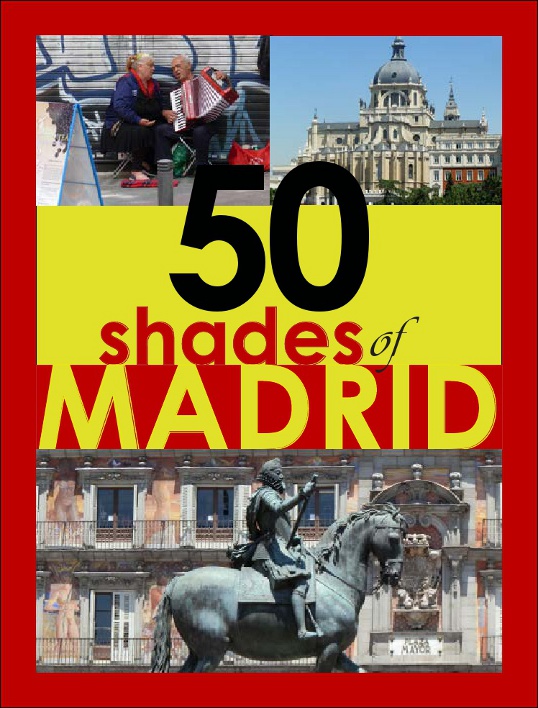
50 shades of Madrid

Blending the historical past with the modern present, this neighbourhood thrives in the middle of Madrid, housing the roots of Catholicism in Madrid, the Royal Palace, and Plaza del Puerta del Sol, quite literally the heart of Madrid. It is here that tourist and natives will cross paths to experience some of the greatest things Madrid has to offer. Surrounded by the ceaseless sounds of city life, this neighbourhood oozes energy and allows any traveler to get a taste of Madrid that spans the centuries. Revel in the splendor left over from the Hapsburg Dynasty’s rule from the 16th-18th centuries. Grab a bocadillo calamares at Plaza Mayor, the old local gathering spot for madrileños. Get a taste of all the flavors of Madrid in this essential starting point for any visit to the city.
Los Austrias, Centro, & Sol

view sample
download travel guide
Curso eG/CTR Travel Writing Team Madrid 2012

Dienstag, 10. Juli 2012

Top Tips Madrid

As Madrid is a city which attracts thousands of tourists throughout the whole year, a few useful
tips will be really helpful - especially for those who are visiting the Spanish capital for the first
time. There are hundreds of things to say about the Spanish culture which can be found in Madrid. However, the following are the most essential tips and distinctive features of Spanish people that might catch your attention. These are often very different from the habits of tourists, and therefore they will be useful to know in advance.

Whilst many cultures queue and wait to be acknowledged, forming a proper queue is quite
unusual in Spain. In fact, Spanish people tend to mass together and therefore jump the
queue. This happens in shops, bars, bus and train stops, and all public buildings where a lot
of people tend to gather together with no particular order, and those who are in more of a
hurry or simply louder get served first. Unlike people belonging to many other cultures who
will stand in a queue, quietly and patiently, in Spain they will strike up a conversation.
Therefore tourists, and in particular those who are more used to forming an orderly queue,
should learn how to play the game and win during their stay in Madrid!

The importance of direct contact is another peculiarity of the Spanish culture, where social
interaction is fundamental. This includes the local habit of introducing yourself and saying
goodbye by kissing on the cheek and very often touching whilst talking as a sign of
approval and establishing friendly contact (i.e. touching you on the shoulder). The atmosphere when you go shopping is of a continuous social network, where people have time for each other and speed does not really matter. So even if Madrid is an extended capital city, here you do not get the impression that people are stressed or in a hurry. Here you can always find some very traditional corner where the common and widely-known Spanish spirit of being friendly and laid back is preserved. As in many other tourist cities, pickpockets are always waiting in ambush. This happens especially in the most crowded and tourist areas of the city such as squares and main streets, as well as on public transport and shopping areas.

Asking Spanish people for directions may be tricky and confusing for tourists, as Spanish people seem to have a different and particular conception of distance! It is very likely that
when you ask local people for directions, you will be told “Est. justo al lado” (“It is just round
the corner”), and after a while you may realise the place is actually far away! Or it could be the
other way round: you might be told a place is too far to walk, when the place was quite close
and definitely walkable!

view sample
CTR Curso eG Travel Writing Team Madrid 2012

Mittwoch, 2. Mai 2012

Donnerstag, 23. Februar 2012

Auslandspraktikum Erfahrungsbericht Unterkunft Madrid

Es handelt sich um ein gut ausgestattetes Apartment rund 20 Minuten vom Stadtzentrum und den Projekträumen entfernt. In wenigen Minuten könnt ihr mit einem Spaziergang auch Plaza Mayor, Palacio Real, und Parque del Buen Retiro erreichen. Zu den Projekträumen in José Ortega y Gasset kommst du zu Fuß oder alternativ auch mit den öffentlichen Verkehrsmitteln welchen rund um die Uhr in                                       Madrid Stadt fahren. Ihr müsst euch um fast nichts kümmern, denn Basis Lebensmittel für das Frühstück stehen im Kühlschrank für euch bereit und auch das Bettzeug ist inklusive.

Ihr habt kostenlosen Zugang zum Internet (WLAN) und könnt die anderen Einrichtungen des Apartments nutzen. Bitte lasst die übliche Vorsicht mit allen Gegenständen walten, Beschädigungen sollten uns ohne zeitlichen Verzug gemeldet werden. Die Endreinigung ist inklusive und auch eine Waschmaschine steht zur Verwendung bereit. Falls Ihr einen eigenen Laptop mitbringen könnt wäre das von Nutzen. Ein Zugang zum Internet steht dir auch im Apartment zur Verfügung.

Praktikumsprogramm Reisejournalismus und Spanisch in Madrid 2012

Montag, 4. April 2011

Mit Curso eG das Nützliche mit dem Angenehmen verbinden

Für die junge deutsche Generation gehört Reisen fast schon zum Alltag - und die Möglichkeiten sind beinah unbegrenzt. Die einen fliegen übers Wochenende nach Amsterdam, andere reisen mit dem Rucksack durch Vietnam, zelten an der deutschen Ostseeküste oder buchen eine Pauschalreise nach Griechenland.

Parallel dazu entwickelt sich allerdings der Trend, dass gerade junge Leute ihre freie Zeit mit Praktika oder Fortbildungen vollpacken müssen, um sich am Arbeitsmarkt durchsetzen zu können.

Und so steht jeder einzelne vor der Qual der Wahl: ob die freien Tage für einen erlebnisreichen Urlaub genutzt werden, oder ob man stattdessen die Zeit dazu nutzt den Lebenslauf aufzupolieren.

Man kann allerdings auch beides haben. Curso eG bietet Reisen nach Madrid an, welche die angenehmen Seiten eines Urlaubs mit den nützlichen Erfahrungen eines Praktikums verbinden.

Die ausgewählten Kursteilnehmer müssen in nur drei Wochen einen Reiseführer über Madrid verfassen, und dazu muss die Stadt natürlich erlebt werden. Die Gruppe entscheidet selbständig über Stil und Inhalt und jeder Schreiberling kann seinen Vorlieben nachgehen: ein gemütlicher Einkaufsbummel wird zu einem wertvollen Erlebnisbericht für den Reiseführer; wer seine Zeit am liebsten beim Flamenco verbringt, recherchiert eben beim Tanzen.

Ideen werden in Tapasbars besprochen, digitale Schnappschüsse werden im Layout verwendet.

Täglich gibt es Workshops von erfahrenen Journalisten zu verschiedenen Themenbereichen und die Teilnehmer können ihre Ideen diskutieren. Ein Korrekturleser überprüft, dass die Artikel rechtzeitig und stil-gemäß geliefert werden, und gibt, wenn nötig, Verbesserungsvorschläge.

Das Ziel in nur drei Wochen einen fertigen Reiseführer zu schreiben ist natürlich ehrgeizig, und so steht jeder Teilnehmer auch unter Zeitdruck. Doch die Arbeit lohnt sich. Am Ende des Projekts haben die Teilnehmer nicht nur neue Freundschaften geschlossen und eine neue Stadt erkundet, sondern sie reisen mit dem guten Gefühl ab gleichzeitig etwas erreicht zu haben, denn der Kurs inklusive Reiseführer dienen nicht nur als Referenzen, sondern ergänzen wunderbar den Lebenslauf.

Weitere Informationen und Termine finden Sie auf www.curso24.de
Aktuelles:
Beyond Cobbled Stones
Clip Edinburgh Travel Writing